Showing posts with label achievement. Show all posts

Monday, 27 March 2017

Achievement of Poor Students is the Educational Challenge of Our Time

       The data is overwhelming:

  • 10.7 million school-aged children living in poverty (source)
  • Over 50% of school-aged children are eligible for Free and Reduce Price Meals (source)
and the results are terrible:
  • Children living in poverty miss more days of schools than children who do not live in poverty.
  • Dropout rates are higher among student from low-income families.
  • 40% of children living in poverty are not prepared for primary schooling.
  • Less than 30% of students from the bottom quarter of income go to college; and less than half of them finish college. (source)
       The academic achievement of poor students has been a challenge that our nation has seen for decades.  Back in the time when earning a high school diploma was less necessary for acquiring a good job, our failure to adequately help poor students was less of an issue.  The penalty for not succeeding in school, while present, was not so severe.  Low-skilled job, manufacturing jobs, and service jobs were relatively plentiful and attaining a middle class life-style, while still somewhat difficult, was more possible.  

       Today, high school graduation (and the hard and soft skills that we want our students to gain in high school) is much more of a necessity than ever before.  Technology has lowered the number of low-skills jobs and "Career and College Readiness" has become so much more than a slogan.


       The statistics are well known.  Student from families in which the parents have college degrees usually do well in school.  Students from families in which the parents didn't finish high school usually do poorly in school.  We are faced with the daunting challenge of overcoming this generational force that seems to keep pulling our most vulnerable students down.  Since "learning" is not something that can be forced on a person, we in the schools need to find a way to convince poor students (and their families) that schooling and education are important.  Knowledge is power.  Academics leads to more opportunities.  

       This is especially true as students move to middle and high school.  The subject content is more difficult; the reading level is higher; and the consequences of better achievement that are recorded and stored in student records are asked for from colleges and universities later on.  It's hard to do hard things--even for bright students.  The issue isn't the level of intelligence.  The issue is the level of motivation that encourages students to carry on even when the work gets harder.

       No one wants to fail.  Poor students are burdened with many hardships that come with a lack of money: less books at home; less technology at home; poor or no healthcare that leads to sick students getting sicker rather than getting better; less food and/or less healthy food.  We need to understand these challenges that are part of the daily experience of our poor students.
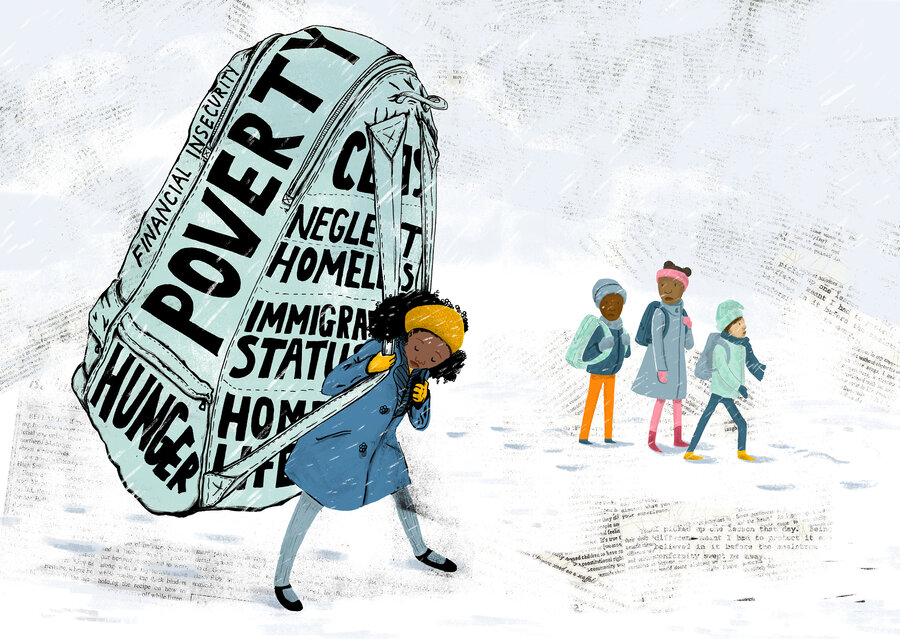
       This has been a problem in education for a long time.  There are pockets of success around the country, but we are far from declaring victory over this problem.  Of all the issues facing education, the issue of educating our poor students looms high above the rest in my opinion.  When this issue is properly addressed and we begin to see improved results, we can truly say that we have given our best to our students and to our society.



Sunday, 5 March 2017

How much Parental Involvement is 'Just Right'?

       Parents are an important part of the educational process.  But some parental involvement is too little and some is too much.  What is the "sweet spot" of parental involvement; What would you consider to be (as Goldilocks would say) "just right" when it comes to parental involvement?

       No one would dispute the value of a strong connection between the home and the school when it comes to better outcomes for education.  We (educators) want parents to be involved.  We want parents to celebrate with us the academic successes of their children, and we want parents to support and to assist us when struggles and obstacles occur along the way.  As teachers, what do you consider to the right amount of parental support?  Is it possible to have too much involvement from the home? What do you consider to be too little support?  As a parent, how do you approach your involvement in your child's education?  Do you leave it all to the schools and the teachers?  Do you check on homework and that's it?  Are you comfortable talking to your child's teacher?

       How much parental involvement falls into the "Just Right" category?  This question may have a different answer for elementary teachers than for high school teachers.  Parents with more education may feel different than parents with less education.  Parents of younger children may answer this question differently than parents of older children.

       As a high school teacher, whenever we had parent-teacher conferences, the parents of students with high grades often came and the parents of students with low grades usually didn't come.  I also saw many parents who (themselves) had a college education and few parents who never went to college.  As a school we would often discuss the issue of finding ways to involve parents and finding ways to invite parents to different school events.  Whenever I reached out to a parent (due to both positive and negative events that occurred with their child in my classroom), I always found a parent who was willing to help and who was appreciative of the contact.

       On the other hand, I've also experienced parents who wanted weekly updates (phone calls or emails); parents who would constantly contact me and other teachers about the smallest issues that occurred in the school relative to their child.  Sometimes these folks were very anti-public-school and they were anxious to share their alternate opinion about what was happening and what (instead) should be the job of the schools.  But most of the time these parents were supportive of the school and certainly supportive of their child--but I worried that the child (in high school) was not given the opportunity to make even the smallest decision on his own about his education.  Still, I felt that more parental involvement was better than no parental involvement and it wasn't my place as a teacher to tell a parent how to help their child.


       What does your school do to encourage more parental involvement?  What can a school do to encourage overly involved parents to allow their children to take more ownership of their education? How much parental involvement is 'just right'?  Is too much involvement a nice problem to have?  

Wednesday, 1 February 2017

Evaluating Teachers

       Learning is highly dependent on the skills and abilities of the teacher.  According to Hattie, the following influences rank very high in their ability to raise student achievement:
  • teacher estimates of achievement
  • collective teacher efficacy
  • teacher credibility
  • classroom discussion
  • teacher clarity
  • improved classroom instruction
       Since we know that teachers influence student outcomes, we want to be sure that our teachers are the best that they can be.  Hence, teachers are evaluated on a regular basis to be sure the they are effective and (hopefully) are improving.

       A common tool that some school use to evaluate teachers is the Charlotte Danielson Framework for Teaching.  This tool, updated in 2013, looks at the job of teachers in four different domains:
  1. Planning and Preparation
  2. The Classroom Environment
  3. Instruction
  4. Professional Responsibilities
Each of these four domains are further divided into five or six components that zero in on specific factors that influence effective teaching.  When this Framework is used to evaluate teachers, each component of each domain is considered and teachers are provided with a plethora of useful feedback.  It is this feedback, along with conversations between the teacher and the evaluator, that lead to continuous improvement among our teachers.

       Different school systems use different processes for evaluating teachers.  However, all school systems recognize the value of teacher evaluations.  Schools change.  New materials, new technology, new information about how students learn; all combine together and require teachers to change what they do from time to time.  No one wants a teacher who has used the same materials for 20 years; or who hasn't changed their teaching strategies (or improved their teaching strategies) for 20 years.  We want teachers that recognize the needs of their students and adjust their teaching accordingly.

       Teacher evaluations are an important part of the teaching profession.  The improvement that we seek in our students, we also seek in our teachers.


Follow us

@Way2themes

Follow Me