Showing posts with label education. Show all posts

Monday, 27 March 2017

Achievement of Poor Students is the Educational Challenge of Our Time

       The data is overwhelming:

  • 10.7 million school-aged children living in poverty (source)
  • Over 50% of school-aged children are eligible for Free and Reduce Price Meals (source)
and the results are terrible:
  • Children living in poverty miss more days of schools than children who do not live in poverty.
  • Dropout rates are higher among student from low-income families.
  • 40% of children living in poverty are not prepared for primary schooling.
  • Less than 30% of students from the bottom quarter of income go to college; and less than half of them finish college. (source)
       The academic achievement of poor students has been a challenge that our nation has seen for decades.  Back in the time when earning a high school diploma was less necessary for acquiring a good job, our failure to adequately help poor students was less of an issue.  The penalty for not succeeding in school, while present, was not so severe.  Low-skilled job, manufacturing jobs, and service jobs were relatively plentiful and attaining a middle class life-style, while still somewhat difficult, was more possible.  

       Today, high school graduation (and the hard and soft skills that we want our students to gain in high school) is much more of a necessity than ever before.  Technology has lowered the number of low-skills jobs and "Career and College Readiness" has become so much more than a slogan.


       The statistics are well known.  Student from families in which the parents have college degrees usually do well in school.  Students from families in which the parents didn't finish high school usually do poorly in school.  We are faced with the daunting challenge of overcoming this generational force that seems to keep pulling our most vulnerable students down.  Since "learning" is not something that can be forced on a person, we in the schools need to find a way to convince poor students (and their families) that schooling and education are important.  Knowledge is power.  Academics leads to more opportunities.  

       This is especially true as students move to middle and high school.  The subject content is more difficult; the reading level is higher; and the consequences of better achievement that are recorded and stored in student records are asked for from colleges and universities later on.  It's hard to do hard things--even for bright students.  The issue isn't the level of intelligence.  The issue is the level of motivation that encourages students to carry on even when the work gets harder.

       No one wants to fail.  Poor students are burdened with many hardships that come with a lack of money: less books at home; less technology at home; poor or no healthcare that leads to sick students getting sicker rather than getting better; less food and/or less healthy food.  We need to understand these challenges that are part of the daily experience of our poor students.
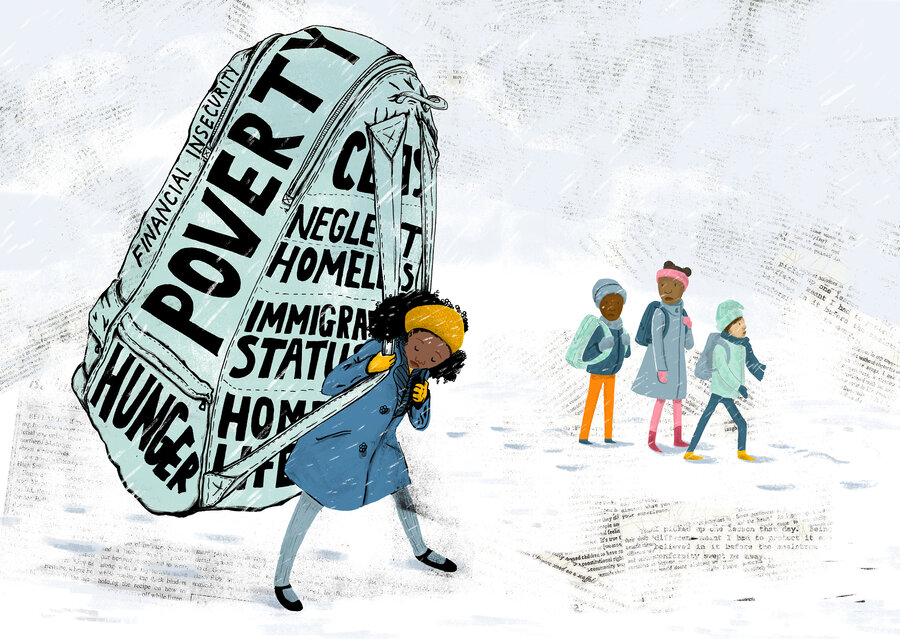
       This has been a problem in education for a long time.  There are pockets of success around the country, but we are far from declaring victory over this problem.  Of all the issues facing education, the issue of educating our poor students looms high above the rest in my opinion.  When this issue is properly addressed and we begin to see improved results, we can truly say that we have given our best to our students and to our society.


Thursday, 23 March 2017

Education Without Grades

 
       Imagine P - 12 schooling without grades.

       Learning?  Yes.
       Art?  Yes.
       Clubs?  Yes.
       Teachers, friends, computers, classes, classrooms?  Yes, yes, yes, yes, and yes.
       Grades?  No.

       The idea of an educational landscape without grades is not so new and (in fact) there are a significant number of schools that are experimenting this idea right now.  New York High School English teacher, Starr Sackstein, has been talking about this for years.  We still teach and we still assess.  We just don't use the traditional grading system of attaching a number or a letter to that assessment.

       The problem with "grading" is that it has grown to be a monster that we can't control.  Parents and students alike will tell you that they care more about "getting-a-good-grade" than they do about "learning".  As with so many other aspects of American life, grading has become a competition to be won, rather than a method for measuring learning and understanding of academic content.  Add to this that grading systems vary widely from school to school and even from teacher to teacher (sometimes) in the same school to the point that it is hard to say what a particular grade actually means; or if the same "grade" means the same thing from one class to another.

       Still, it can be hard to convince a generation that (whether they like it or don't like it) has grown up with the letter grade system, that a no grades system is a better way to conduct our middle and high schools.  Here is a great article that contains students' thoughts about living through a "no-grades" experiment.  (Spoiler alert: One-third liked the idea, one-third didn't like it, and one-third didn't care.)

       I often say that the goal of education is learning.  If something hampers our efforts to help students to learn, I think we should do something about that.  Grades and grading have (in many cases) become the new goal or the more prominent goal of education in the minds of many students and parents.  That's a problem.  If we are preparing students for the world of work, what will be their motivation if without grades in the workplace?

       Colleges regularly get rid of students that can't keep up academically.  It doesn't matter what their grades were in high school.  What matters is what they know and are able to do.  Same thing with employers.  Good grades might get you the job, but only true ability will enable you to keep the job.  We need to teach students the value of learning exceeds the value of earning good grades.  Maybe the way to do this is to get rid of the grades.

       What do you think?


Tuesday, 7 March 2017

What is Blended Learning?

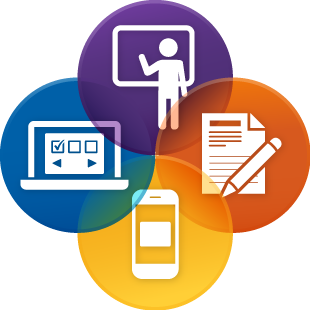
              Blended learning is an education program (formal or informal) that combines online digital media with traditional classroom methods. It requires the physical presence of both teacher and student, with some element of student control over time, place, path, or pace.

       My school district has begun the journey into Blended Learning over the past couple of years.  As an educator approaching his 30th year in the business, I view Blended Learning as an effort to bridge all of the positive and effective teaching and learning strategies that the educational and research communities have learned over the past few decades.

       Like any new initiative, Blended Learning will take some time for teachers and students and parents to learn and understand.  We will have to discover new and better ways to implement it in a way that is most beneficial to our students.  This effort will be well worth it.  Blended Learning--as I see it--addresses the following educational beliefs:


  1. Learning at your own pace.  In a traditional classroom, 30 students learn the same thing at the same time.  If you pick up on the topic quickly, you have to wait for your classmates to catch up.  If you struggle to understand the topic, you have to move to something else before you fully understand.  Blended Learning allows students to move at their pace.  Everyone is learning the same topic, but fast learners are given more challenging work and struggling learners are given more assistance.
  2. Multiple ways to show what you know.  In the traditional class, students can only demonstrate their understanding through classwork and homework and tests.  While this isn't a terrible method for measuring student knowledge, we certainly know that this method can lead to the appearance of learning when (in reality) little learning occurred.  Classwork can be graded on completion instead of quality.  Homework completion can come from lots of parental help for some and no parental help for others.  And tests can earn high grades due to cramming and memorizing rather than due to actual learning.  In the Blended classroom, students work with each other and help each other; teachers can spend more time one-on-one with their students (or in small groups).  Students can demonstrate their understanding through informal assessments and assignments in addition to more formal and traditional testing.
  3. Multiple attempts to learn.  We know that learning is a process.  Few students can sit in six or seven classes a day and learn six or seven different things strictly from listening and taking notes.  Learning requires listening and thinking and doing and sometimes failing the first couple of attempts.  Blended Learning recognizes the learning process and students understand that it is OK if they don't get it right away.  Blended Learning also provides different modalities for student learning.  These include: small group work, individual work, using online resources, using paper and pencil resources, and allowing students to verbalize their understanding.
       Blended Learning recognizes that students learn in different ways and at different rates--and this is not only OK, it is expected that all students learn in different ways.  The goal is learning.  Blended Learning permits students to be students and to learn in a way that works for them.  Learning isn't a competition.  Learning faster isn't better than learning slower.  Everyone that reaches the finish line is a winner.  Blended Learning helps students to see the value of learning.

Saturday, 14 January 2017

Data, Data, Data Leading to High Achievement

     Education and learning is the result of hours of planning and hard work on the part of teachers and students.  Behind the scenes in every public school that cares about student learning, there are individual and teams of teachers that use data to make good instructional decisions.


       In years past, we only had data from chapter tests.  But since the chapter was completed and the instruction has already moved on to the next topic, this data was already "old news".  It couldn't be used to help us to make good instruction decision for right now.  Today teachers understand the power of using data to guide their decisions.  When the public hears about school data, they often think about tests results--probably because that is the most common form of data that is published in the news.  But teachers use all sorts of data that doesn't include test data.

Data-Driven Decision Making

       Public school teachers measure student progress in many ways in today's classrooms.  Teachers use rubrics to assess projects or some assignments.  Teachers use games.  Teachers use exit tickets.  Questions, discourse, group work, individual work, electronic responses, etc.  Teachers have multiple sources of student data.  This data is used to help teachers to decide:
  1. Who gets it.
  2. Who sort of gets it.
  3. Who doesn't get it.
These determinations are used to help teachers to prepare for the next lesson.  Chapter tests and large, state-wide standardized tests are a "final" product of the educational process.  They don't help us in our day-to-day planning.  It is the daily collection of data from formative assessments that inform instructional decision.  It is also this data (or the information from this data) that help students to gain a sense of how well they are understanding the content.

       Indeed, learning is a process.  It takes time and practice and effort.  It requires students and teachers to ask a lot of questions and often to make mistakes along the way.  It requires thinking and reasoning based on what we've done so far and what we still need to do.  The data that comes from these efforts help all of us to measure progress toward the goal of learning.  Most of this data analyzing is invisible to the public.  It is the technical work of teaching that is too "un-interesting" to print in the newspapers and yet vital to the practice of teaching.

       Data drives decisions for students and schools.  Data is the fuel that keeps our classrooms running in the right direction.


Follow us

@Way2themes

Follow Me